StarGazer
Astronomy made simple.
Tonight's Outlook
Overcast skies will severely limit visibility and telescope observing tonight. High risk of rain/precipitation; keep your equipment covered. High dew risk — expect lens condensation tonight. Poor conditions tonight. Great opportunity to review your gear or read astronomy logs.
🔭 Best window: No clear window tonight
100%
2.3 km/h
56%
99%
0.2°C
0.2 km
Moon
🌔 Waxing Gibbous
🔴 Poor — planets & stars only
The bright moon dominates the sky tonight, making it a great time for lunar detail but challenging for faint objects.
Objects in Motion
Clear Outside — Astronomical Weather Forecast
📊 How to Read This Forecast ChartShow Guide ▼
Calibrated for ground-based observationSUMMARY Row: Red = overcast, Orange = mixed, Green = clear sky.
CLOUD Rows: Pure white = 0% cloud. Dark blue = 100% cloud cover.
Check the REL. HUMIDITY & DEW RISK rows. High humidity scatters light and washes out deep-sky targets.
When the Dew Risk row turns red, moisture condenses on cold optics. Ensure dew heaters and shields are active before observing.
Constellations Tonight
Must-See & AI Picks
"AI seeing forecast based on your local weather and light pollution."
Spot the 4 Galilean moons through your telescope!
Look for the polar ice caps!
Catch it quickly before it sets!
The ISS travels at 7.66 km/s (17,150 mph) — fast enough to circle the entire Earth in just 92 minutes.
Planets Tonight
Venus
Look towards the SSW (213°). Venus is currently traveling through Vir and shines at Mag -4.0.
Rise: 08:47 AM · Set: 07:51 PMMercury
Look towards the SW (236°). Mercury is currently traveling through Vir and shines at Mag -0.5.
Rise: 07:36 AM · Set: 07:15 PMJupiter
Look towards the WNW (287°). Jupiter is currently traveling through Leo and shines at Mag -2.5.
Rise: 03:06 AM · Set: 03:59 PMMars
Look towards the WNW (301°). Mars is currently traveling through Gem and shines at Mag 0.5.
Rise: 01:33 AM · Set: 02:45 PMNeptune
Look towards the ENE (76°). Neptune is currently traveling through Psc and shines at Mag 7.8.
Rise: 06:20 PM · Set: 06:27 AMSaturn
Look towards the ENE (69°). Saturn is currently traveling through Cet and shines at Mag 0.8.
Rise: 06:52 PM · Set: 07:06 AMUranus
Look towards the N (351°). Uranus is currently traveling through Tau and shines at Mag 5.7.
Rise: 09:49 PM · Set: 11:00 AMInteractive 3D Solar System
Model by NASA Eyes on the Solar System
NASA 3D Solar System Explorer
Explore live planetary orbits and 3D spacecraft trajectories directly from NASA Eyes on the Solar System. Calibrated to your display size.
Observing Pre-Flight Checklist
Telescope, Optical & Environmental Preparation
Plan My Night
Your night schedule is empty
Click "Add to Plan" on any target card in the database above to plan your night session.
Observation Log
Field Sessions & Optics Records
Antares (Alpha Sco)
Clear skies, excellent seeing. Scorpius well positioned.
M8 - Lagoon Nebula
Sagittarius rising late. Some thin cirrus at dawn.
Jupiter
Great Red Spot visible. Four Galilean moons aligned.
7-Day Forecast
Light Pollution Map
Map by Light Pollution Map
Explore Light Pollution Near You
Open the interactive light pollution map centered on your selected coordinates to analyze local Bortle scale class and sky glow.
Aurora & Space Weather
Data powered by NOAA Space Weather Prediction Center NOAA SWPC
Planetary Kp-Index
Kp 1.7: Low probability of Auroras
Aurora Visibility
Aurora is unlikely to be visible at your current latitude.
Space Weather Alerts
CME
Faint CME observed to the NW in STEREO A COR2 and SOHO LASCO C2/C3, largely blocked by the pylon in GOES CCOR-1. The source is unclear, with a potential far-sided source on the STEREO A EUVI 195/304 west limb observed as brightening and field line movement starting around 2026-09-21T09:05Z, very close to the CME start time however. There are two additional field line movements near the NW limb in SDO AIA 171 starting around 2026-09-21T03:03Z and 2026-09-21T05:54Z, however these eruptions may be too early to be associated with this CME. Triangulation of the leading edge suggests the CME is far-sided.
Telescope Optics & Eyepiece Guide
💡 Planets are small and bright — use your shortest focal-length eyepiece for high magnification. A 3-5mm exit pupil keeps detail sharp without the image going too dim.
Resources
Clear Outside
Astronomical weather forecasting
Stellarium Web
Real-time sky map for any date/time/location
TheSkyLive
Live Scorpius positions and object finder
In-The-Sky.org
Astronomy event calendar
Heavens-Above
ISS & satellite passes
AstroBin
Astrophotography community
KStars
Free Stellarium alternative with EKOS
NASA Eyes on the Solar System
Interactive real-time 3D solar system explorer
Light Pollution Map
Interactive Bortle-scale sky darkness map
🌌 NASA Astronomy Picture of the Day
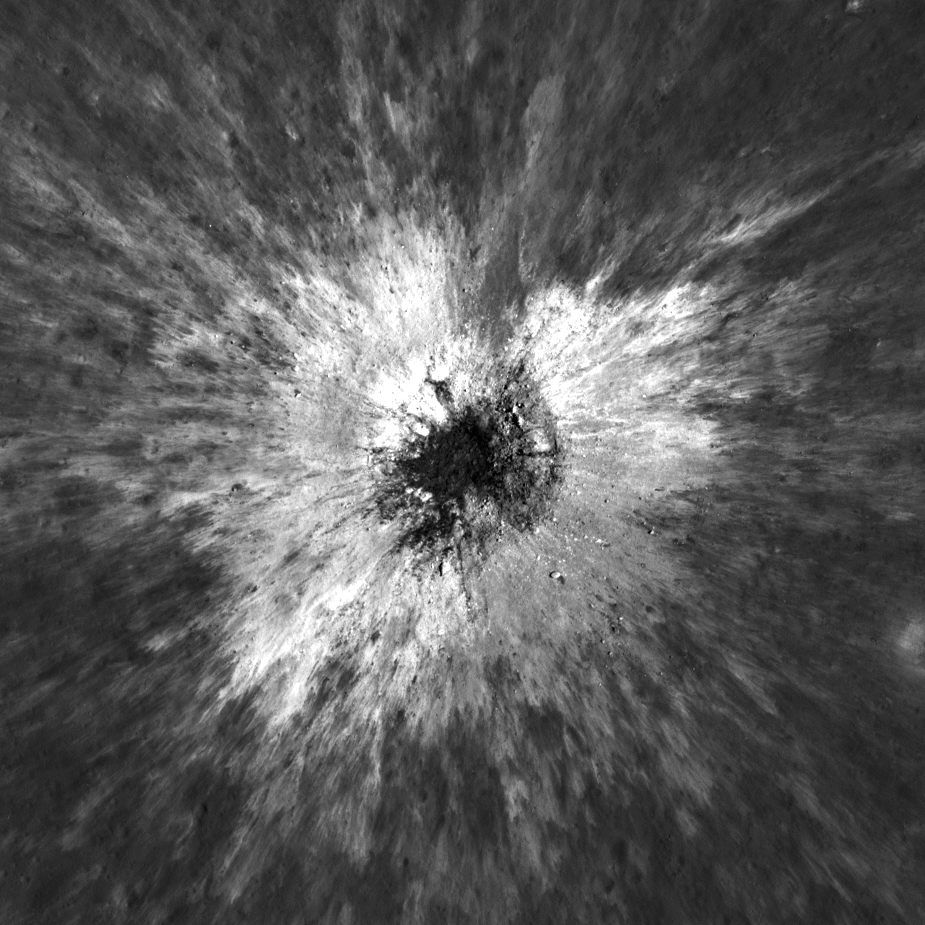
A New Lunar Crater: McGetchin
A once-in-a-lifetime crater has appeared on the Moon! A comet or asteroid roughly the size of a humpback whale (approximately 10-20 meters, 30-60 feet) crashed into the Moon sometime between April and May of 2024. The Lunar Reconnaissance Orbiter (LRO), with its monthly monitoring of the Moon, captured today’s images of the lunar surface before and after the event. The resulting crater, named after Apollo-era lunar scientist McGetchin, is two soccer fields across. Craters of this size are only expected once every 132 years! Follow up thermal imaging revealed a large cold spot that surrounds the warm crater. Surface impacts will puff up the loose lunar sediment, or regolith, making it less dense and harder to retain heat. This event affected an area much larger than the visible crater, which will inform humanity’s understanding of surface impacts and the evolution of the Moon’s surface. It also reminds us all to be thankful for Earth's atmosphere. APOD's email for image submissions has changed. Please see: APOD Submissions. APOD's main NASA site is moving: From apod.nasa.gov to science.nasa.gov/apod